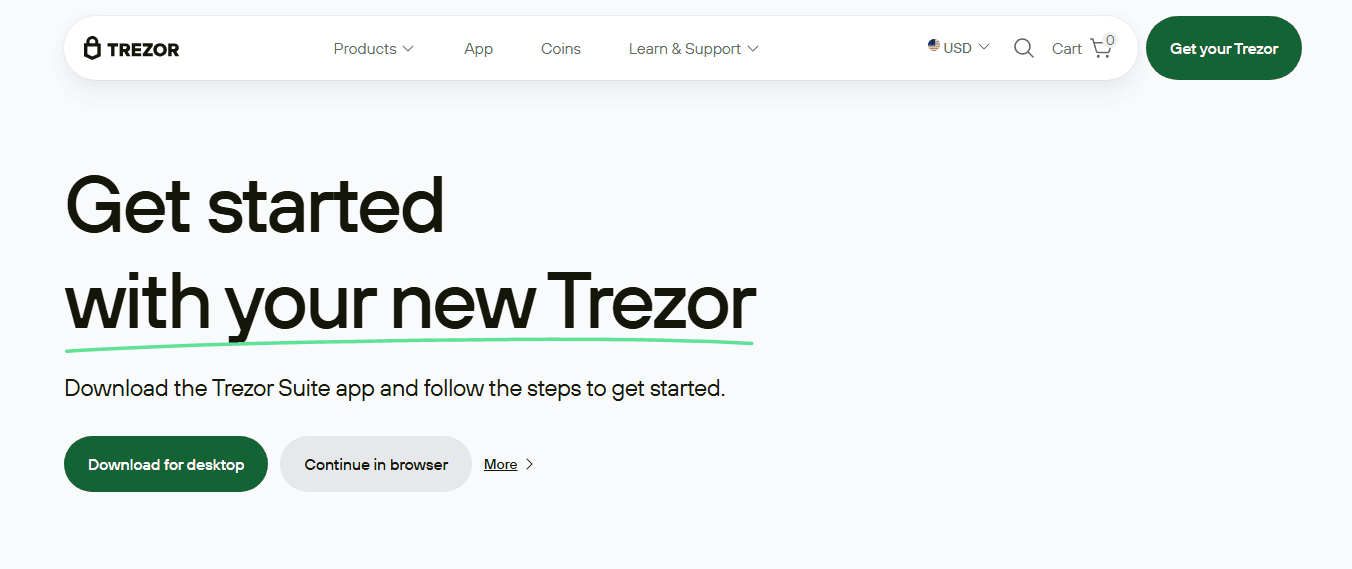
Trezor.io/Start: A Complete Guide to Setting Up and Securing Your Crypto Wallet
Cryptocurrency security is one of the most important topics for anyone who owns digital assets. Unlike traditional banking, crypto puts full control—and full responsibility—into the hands of the user. This is where hardware wallets play a critical role. Trezor, one of the most trusted names in crypto security, provides a secure and user-friendly way to store digital assets offline.
The official setup page, Trezor.io/start, is the gateway for initializing and safely configuring a Trezor hardware wallet. This guide explains what Trezor.io/start is, why it matters, and how to use it properly to protect your cryptocurrency.
What Is Trezor?
Trezor is a hardware wallet designed to store cryptocurrency private keys offline. It was created by SatoshiLabs and is widely recognized as the world’s first hardware wallet for Bitcoin. Unlike software wallets or exchange wallets, Trezor keeps your private keys isolated from the internet, protecting them from hackers, malware, and phishing attacks.
Trezor wallets support thousands of cryptocurrencies, including Bitcoin, Ethereum, Litecoin, and many ERC-20 tokens. The two most popular models are:
Trezor Model One
Trezor Model T
Both models use the same official setup process, which begins at Trezor.io/start.
What Is Trezor.io/Start?
Trezor.io/start is the official onboarding and setup page for Trezor hardware wallets. It provides step-by-step instructions to:
Verify your Trezor device
Install official Trezor software
Update firmware
Create a new wallet or recover an existing one
Generate and secure your recovery seed
Using this official page is critical because it ensures you are downloading genuine software and following trusted security practices.
Why You Should Always Use the Official Trezor.io/Start Page
Security begins with authenticity. There are many fake websites that attempt to impersonate Trezor in order to steal recovery seeds or install malicious software. Using Trezor.io/start ensures:
Official software downloads only
Verified firmware updates
Correct setup instructions
Protection from phishing attacks
You should never trust links from emails, ads, or social media claiming to help you “set up” your wallet. Always manually type trezor.io/start into your browser.
What You Need Before Visiting Trezor.io/Start
Before starting the setup process, make sure you have:
A new or reset Trezor device
A computer or mobile device
A USB cable (or USB-C for Model T)
A pen and paper for writing down your recovery seed
A private, secure environment
Never take photos of your recovery seed and never store it digitally.
Step-by-Step Guide to Using Trezor.io/Start
Step 1: Connect Your Trezor Device
Go to Trezor.io/start and select your device model. Connect your Trezor to your computer using the provided cable. The device screen will confirm that it is powered on.
If your device is brand new, it will not have firmware installed yet.
Step 2: Install Trezor Suite
Trezor.io/start will guide you to install Trezor Suite, the official desktop and web application used to manage your wallet.
Trezor Suite allows you to:
View balances
Send and receive crypto
Manage multiple accounts
Update firmware
Adjust security settings
Always download Trezor Suite directly through the official site.
Step 3: Install or Update Firmware
Firmware is the software that runs on your hardware wallet. During setup, Trezor.io/start will prompt you to install or update firmware.
Important security notes:
Trezor devices ship without pre-installed firmware
Installing firmware yourself ensures it hasn’t been tampered with
Firmware updates add security improvements and new features
Follow on-screen instructions and confirm the installation on your device screen.
Step 4: Create a New Wallet or Recover an Existing One
At this stage, Trezor.io/start gives you two options:
Create a New Wallet
Choose this if you are using Trezor for the first time. Your device will generate a brand-new wallet and recovery seed.
Recover an Existing Wallet
Choose this if you already have a recovery seed from a previous wallet and want to restore access.
For maximum security, recovery words are always entered on the device itself, not on your computer.
Step 5: Write Down Your Recovery Seed
This is the most important step of the entire setup process.
Your Trezor will generate a 12-word or 24-word recovery seed. These words are the master key to your wallet.
Best practices:
Write the words down in the exact order
Use pen and paper only
Never take photos or screenshots
Never store the seed online
Never share it with anyone
If someone gains access to your recovery seed, they can take all your crypto.
Step 6: Confirm the Recovery Seed
Trezor.io/start will ask you to confirm your recovery seed by selecting words in the correct order. This ensures you copied it correctly.
If you make a mistake, restart the process and generate a new seed.
Step 7: Set a PIN Code
You will now create a PIN code for your Trezor device.
The PIN protects your wallet if the device is lost or stolen
PIN entry uses randomized number placement to prevent keylogging
Choose a PIN that is hard to guess but easy for you to remember
Never store your PIN together with your recovery seed.
Using Trezor After Setup
Once setup is complete, you can begin using your wallet through Trezor Suite.
Sending Cryptocurrency
Connect your Trezor device
Confirm the transaction details on the device screen
Approve physically by pressing the device buttons
Receiving Cryptocurrency
Generate a receive address in Trezor Suite
Verify the address on your device screen
Share the address to receive funds
Always confirm addresses on the hardware screen, not just on your computer.
Supported Cryptocurrencies
Trezor wallets support thousands of coins and tokens, including:
Bitcoin (BTC)
Ethereum (ETH)
Litecoin (LTC)
Cardano (ADA)
Polygon (MATIC)
ERC-20 tokens
Many others
Support may vary depending on the model and firmware version.
Advanced Security Features
Trezor offers several advanced options for users who want extra protection:
Passphrase Protection
Adds an extra word that is not stored on the device. Even if someone steals your recovery seed, they cannot access funds without the passphrase.
Hidden Wallets
Each passphrase creates a separate wallet, allowing plausible deniability.
Shamir Backup (Model T)
Splits your recovery seed into multiple shares, reducing the risk of a single point of failure.
Common Mistakes to Avoid
Many crypto losses happen due to user error. Avoid these common mistakes:
Using unofficial setup websites
Sharing recovery seed with anyone
Storing recovery seed digitally
Buying used or tampered devices
Ignoring firmware updates
Trezor.io/start exists to help users avoid these exact problems.
What to Do If You Lose Your Trezor Device
If your Trezor device is lost or damaged:
Your funds are not lost
Use your recovery seed to restore the wallet on a new Trezor
Anyone without the recovery seed cannot access your crypto
This is why protecting the recovery seed is more important than protecting the device itself.
Why Trezor Is Trusted Worldwide
Trezor has earned trust through:
Open-source software and firmware
Transparent security practices
Years of proven reliability
Strong community support
Continuous security audits
Millions of users rely on Trezor.io/start as the first step toward secure self-custody.
Final Thoughts on Trezor.io/Start
Trezor.io/start is more than just a setup page—it is the foundation of secure cryptocurrency ownership. By following the official instructions carefully, users gain full control of their digital assets while minimizing security risks.
In a world where online threats are constantly evolving, using a hardware wallet like Trezor and setting it up correctly is one of the smartest decisions a crypto holder can make.