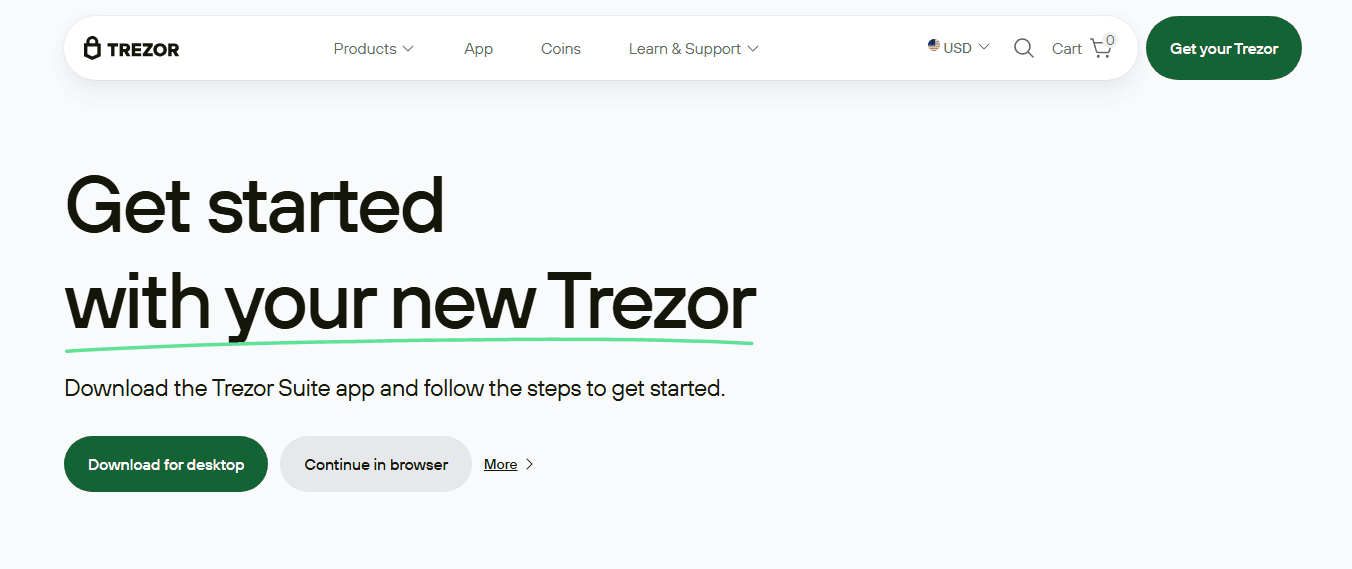
Trezor.io/Start – Official Setup Instructions for Trezor Hardware Wallet
Managing cryptocurrency securely requires tools designed specifically to protect private keys from online threats. Hardware wallets provide this protection by keeping sensitive data offline. Trezor, developed by SatoshiLabs, is one of the most reliable hardware wallets available today.
The official starting point for configuring a Trezor device is Trezor.io/start. This page provides verified software, trusted instructions, and security guidance for both new and existing users. This document explains how Trezor.io/start works and how to correctly set up and maintain a Trezor hardware wallet.
Overview of Trezor Hardware Wallets
A Trezor hardware wallet is a physical device that stores cryptographic private keys in a secure, offline environment. Transactions are signed directly on the device, preventing private keys from being exposed to internet-connected systems.
Trezor wallets support thousands of cryptocurrencies and are widely used by individuals who want full control of their digital assets.
Available Trezor Devices
Trezor Model One – Entry-level device with strong security
Trezor Model T – Touchscreen model with advanced backup options
Both devices use the same setup process through Trezor.io/start.
Purpose of Trezor.io/Start
Trezor.io/start is the official setup and onboarding page maintained by Trezor. It ensures users complete the following securely:
Installation of official wallet software
Firmware verification and updates
Wallet creation or restoration
Recovery seed generation and confirmation
Security configuration
Using unofficial setup instructions may expose users to security risks.
Security Importance of Using the Official Setup Page
Fraudulent websites often impersonate hardware wallet setup pages. These sites aim to collect recovery phrases or install malicious software.
Using Trezor.io/start helps prevent:
Phishing attacks
Installation of counterfeit software
Exposure of recovery seeds
Device tampering
Always manually type the website address into your browser.
System and Setup Requirements
Before beginning setup, ensure the following:
New or factory-reset Trezor device
Desktop or laptop computer
Stable internet connection
USB or USB-C cable
Pen and paper for backup storage
Private environment
Do not use cloud storage or digital devices to store recovery information.
Device Setup Instructions Using Trezor.io/Start
Step 1: Access the Setup Page
Navigate to Trezor.io/start using a trusted browser. Select the appropriate device model and connect your Trezor to the computer.
New devices do not include preinstalled firmware.
Step 2: Install Trezor Suite
The setup page will prompt you to download Trezor Suite, the official application used to manage your wallet.
Trezor Suite features include:
Account management
Transaction verification
Cryptocurrency storage
Security settings
Firmware updates
Install only from the official source.
Step 3: Firmware Installation and Verification
Firmware is essential for device operation. Follow the on-screen instructions to install or update firmware.
Important notes:
Firmware authenticity is verified on the device
User confirmation is required
Updates enhance security and compatibility
Never disconnect the device during this step.
Step 4: Wallet Initialization Options
You will be prompted to choose one of the following:
Create a New Wallet
Generates a new recovery seed and wallet structure.
Recover Existing Wallet
Restores a wallet using an existing recovery seed.
Recovery inputs are entered directly on the Trezor device.
Step 5: Recovery Seed Backup
The device will generate a 12-word or 24-word recovery seed.
Backup guidelines:
Write each word clearly in order
Store the backup offline
Protect against fire and water damage
Never share or digitize the seed
The recovery seed is the only way to restore access.
Step 6: Seed Verification Process
You must confirm selected recovery words on the device to ensure accurate recording.
Failure to confirm correctly requires restarting the wallet setup.
Step 7: PIN Configuration
A PIN code prevents unauthorized physical access.
Randomized entry layout
Increasing delays after failed attempts
Required on every device connection
Choose a secure PIN and store it separately.
Using the Wallet After Setup
Once setup is complete, the wallet is operational through Trezor Suite.
Receiving Assets
Generate a receiving address
Confirm the address on the device
Share the verified address
Sending Assets
Enter transaction details
Verify details on the Trezor screen
Approve transaction manually
Device verification ensures protection from malware.
Cryptocurrency Compatibility
Trezor supports a broad range of cryptocurrencies, including:
Bitcoin
Ethereum
Litecoin
Cardano
Polygon
ERC-20 tokens
Asset availability depends on firmware version and device model.
Optional Security Enhancements
Passphrase Feature
Adds an extra security layer by creating separate wallets.
Hidden Wallets
Allows multiple wallets under a single recovery seed.
Shamir Backup (Model T)
Splits recovery seed into multiple shares for distributed storage.
Common User Errors
Avoid the following:
Using unofficial setup instructions
Sharing recovery phrases
Storing backup digitally
Purchasing used devices
Skipping firmware updates
Most losses occur due to improper handling of recovery information.
Device Loss or Replacement
If your Trezor device is lost or damaged:
Funds remain secure
Restore wallet using recovery seed
Replacement device can be used
Without the recovery seed, access cannot be restored.
Trust and Transparency
Trezor is trusted globally due to:
Open-source firmware
Transparent security practices
Long-standing reputation
Active development and audits
Trezor.io/start is a critical part of this secure ecosystem.
Conclusion
Trezor.io/start is the official and secure entry point for setting up a Trezor hardware wallet. By following the instructions provided, users can confidently protect their cryptocurrency and maintain full control of their digital assets.